
Call us now :08045479309
 Send Inquiry
 Send Inquiry
Rolling Mill Fiber Bearing
MOQ : 1 Piece
Rolling Mill Fiber Bearing Specification
- Precision Rating
- Standard
- Inside Diameter
- Customizable (as per requirement)
- Cage Material
- Fiber
- Thickness
- Customizable
- Lubrication Type
- Oil or Grease
- Retainer
- Integrated Fiber
- Bearing Type
- Fiber Bearing
- Material
- High-Grade Fiber
- Structure
- Cylindrical Sleeve
- Seals Type
- Open
- Number Of Rows
- Single Row
- Bore Size
- Customizable (as per requirement)
- Outside Diameter
- Customizable (as per requirement)
- Limiting Speed
- Low to Moderate (typical for fiber bearings)
- Load Capacity
- Heavy Duty
- Surface Finish
- Smooth
- Surface Hardness
- Optimized for wear resistance
- Corrosion Resistance
- Good
- Density
- Approximately 1.4-1.5 g/cm3
- Application
- Rolling Mill Machinery
- Shock Load Resistance
- Excellent
- Temperature Resistance
- Up to 120C
- Lead Time
- 2-4 Weeks
- Color
- Natural Fiber Brown
- Manufacturing Process
- Compression Molded or Machined
- Packaging Type
- Wooden/Carton Box
- Available Sizes
- Customized as per client needs
- Replacement Interval
- Recommended after 1-2 Years (depending on usage)
Rolling Mill Fiber Bearing Trade Information
- Minimum Order Quantity
- 1 Piece
- Payment Terms
- Cheque, Cash Advance (CA)
- Supply Ability
- Piece
- Delivery Time
- Week
- Main Export Market(s)
- Eastern Europe, Middle East, Africa, Western Europe, Australia, South America, Asia, Central America, North America
- Main Domestic Market
- All India
About Rolling Mill Fiber Bearing
We have gained immense appreciation from clients for manufacturing and exporting an excellent stock of Rolling Mill Fiber Bearing. This bearing is wisely manufactured from cotton fabric impregnated with phenolic resin. The offered Rolling Mill Fiber Bearing is best known for its low co-efficient of friction with water lubrication. This way, it minimizes the lubricant cost. These are highly resistant to abrasion and give much longer service performance than others.
Features:
- Light weight
- Easy to handle
- Solid construction
Precision-Engineered for Demanding Environments
The Rolling Mill Fiber Bearing is built to withstand the most rigorous conditions in rolling mill machinery. Its excellent shock load resistance and efficient heat management allow it to operate reliably at temperatures up to 120C, making it an ideal choice for high-stress industrial environments. Experience the advantage of long-lasting performance with every installation.
Customizable Design for Versatile Applications
Every plant has unique requirements, which is why our fiber bearings are available in fully customizable sizes, bore diameters, and thicknesses. Whether retrofitting existing machinery or outfitting new production lines, you can count on precision manufacturing to match your needs and optimize machinery performance.
Durability and Easy Maintenance Built In
Our compression-molded or machined fiber bearings are made to last, with a recommend replacement interval of 1-2 years depending on use. The open-seal, single-row design allows for easy inspection, lubrication, and replacement, minimizing downtime and ensuring smooth, reliable operation throughout the service life.
FAQs of Rolling Mill Fiber Bearing:
Q: How is the Rolling Mill Fiber Bearing installed in rolling mill machinery?
A: The bearing is typically mounted as a cylindrical sleeve within the designated housing of the rolling mill machinery. Its customizable dimensions ensure a precise fit. Installation involves inserting the bearing onto the shaft, followed by applying suitable lubrication (oil or grease) as per operational requirements.Q: What are the main advantages of using a fiber bearing in rolling mills?
A: Fiber bearings offer excellent shock load resistance, good corrosion resistance, and a smooth surface finish that enhances wear life. Their high-grade construction minimizes maintenance, and they can operate effectively under low to moderate speeds and heavy loads.Q: When should the Rolling Mill Fiber Bearing be replaced?
A: It is generally recommended to replace the bearing every 1-2 years, depending on operational intensity and specific usage conditions. Regular inspections can help identify any wear or performance decline to determine when replacement is necessary.Q: Where are these fiber bearings manufactured and shipped from?
A: We manufacture, supply, and export these fiber bearings from our facility in India, providing packaging options in wooden or carton boxes to ensure secure transit and international delivery.Q: What is the manufacturing process for these bearings?
A: Bearings are produced using either compression molding or precision machining, depending on the required specifications and batch size. This process ensures a robust, dense structure optimized for high wear resistance under industrial loads.Q: How does the surface finish contribute to bearing performance?
A: The smooth, optimized surface finish reduces friction, minimizes wear on both bearing and shaft, and contributes to improved machine efficiency and longevity.Q: What lubrication is recommended for optimal bearing function?
A: Either oil or grease can be used, selected according to operational temperature and load requirements. Consistent lubrication helps maintain performance and extends bearing service life.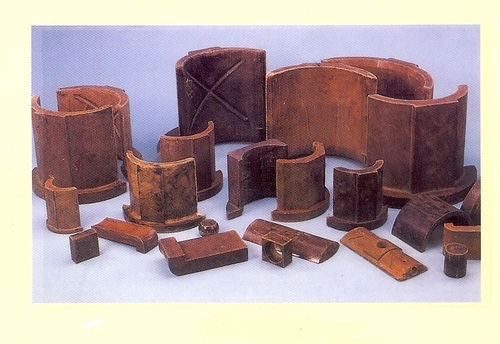
Tell us about your requirement

Price:
Quantity
Select Unit
- 50
- 100
- 200
- 250
- 500
- 1000+
Additional detail
Mobile number
Email

More Products in Fiber Bearing Category
Fiber Pad Bearing
Minimum Order Quantity : 1 Piece
Lubrication Type : Other, Dry (SelfLubricating)
Load Capacity : Medium to High
Bearing Type : Other, Fiber Pad Bearing
Material : Other, Compressed Fiber / Phenolic Fiber
Outside Diameter : As per requirement (customizable)
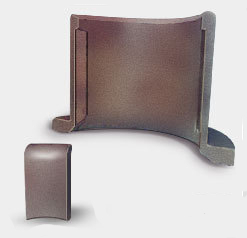
Rolling Mill Fiber Pad Bearing
Lubrication Type : Grease
Load Capacity : High Load
Bearing Type : Other, Fiber Pad Bearing
Material : Other, Fiber
Outside Diameter : 160 mm

 Send Inquiry


Our Products

26, Madhu Milan Estate, Naroda GIDC, Phase-I, Ahmedabad - 382330, Gujarat, India

Mr. Nikunj Bhavsar
(Proprietor )
Mobile :08045479309
 Send Inquiry
 Send SMS
Developed and Managed by Infocom Network Private Limited.
