
Call us now :08045479309
 Send Inquiry
 Send Inquiry
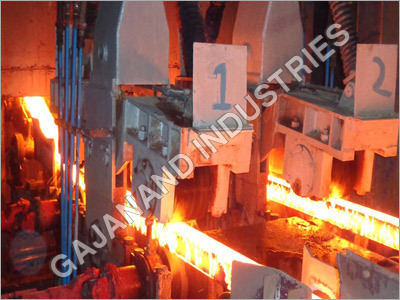
Reheating Furnace
MOQ : 1 Piece
Reheating Furnace Specification
- Efficiency (%)
- Up to 85%
- Temperature Range
- 700C to 1300C
- Production Capacity
- 1 30 Ton/hr or as required
- Speed
- Adjustable as per process
- Automation Grade
- Automatic
- Driven Type
- Electric / Oil / Gas Fired
- Model No
- Custom / Project Based
- Installation Guideline
- Supervised installation by manufacturer
- Accessories
- Burners, control panel, fans, refractories, roller table
- Motor Power
- As per project requirement
- Usage & Applications
- Heating billets, blooms, slabs for steel rolling mill, forging steel plants
- Frequency
- 50 Hz
- Type
- Reheating Furnace
- Material
- Mild Steel / Stainless Steel
- Computerized
- Yes
- Automatic Grade
- Automatic
- Control System
- PLC / PID Controller
- Drive Type
- Electric
- Voltage
- 415 V
- Power
- Customizable (Depends on capacity)
- Weight (kg)
- Custom built as per project
- Dimension (L*W*H)
- As per design specification
- Color
- Industrial Grey / Custom
- Capacity
- Custom tailored to customer needs
- Features
- Efficient heating, uniform temperature distribution, robust construction, fuel efficient operation
- Power Consumption
- Depends on operation and design
- Surface Finish
- Heat-resistant painted exterior
- Machine Type
- Continuous and batch type
- Emission Standard
- Conforms to local pollution control guidelines
- Safety Features
- Overtemperature protection, flame proof materials, gas leak detector (if required)
- Refractory Lining Thickness
- Typically 115 mm to 230 mm (customizable)
- Maintenance Access
- Designed for easy inspection and component replacement
- Chimney Height
- According to industrial norms and air regulation standard
- Heat Recovery System
- Recuperator/Regenerative systems (optional)
- Fuel Type
- Electricity, Furnace Oil, LDO, PNG, CNG, Diesel, Coal Gasifier support available
- Ambient Temperature Range for Use
- Up to 55C
- Heating Method
- Radiant and convective heating
Reheating Furnace Trade Information
- Minimum Order Quantity
- 1 Piece
- Payment Terms
- Cheque, Cash Advance (CA)
- Delivery Time
- Week
- Sample Available
- Yes
- Main Export Market(s)
- Australia, Eastern Europe, Middle East, Africa, Western Europe, Central America, South America, Asia, North America
- Main Domestic Market
- All India
About Reheating Furnace
Reheating Furnace
With the experience gained by our team of proficients, we are indulged in manufacturing, exporting and supplying range of Reheating Furnace to the clients. With the help of advanced tools and ultra-modern techniques, we manufacture this furnace keeping in mind the international quality standards. Known for its high strength, sturdy construction and longer service life, the offered furnace is highly appreciated among the clients. The provided furnace is widely used in steel rolling mills. Besides, we are providing this Reheating Furnace in several specifications according to the needs of the clients.
Features:
- Application specific design
- Strong construction
- Energy efficient
- User friendly operation
Versatile Fuel Compatibility
Whether your facility relies on electricity, oil, gas, or coal gasifier, our reheating furnaces support a full range of fuel types. This flexibility optimizes running costs and enables integration with different energy resources, meeting both operational and budgetary goals for various industries.
Customizable Design for Any Application
From refractory lining thickness to billet size, capacity, and dimensions, every aspect of the furnace can be customized. We ensure a seamless fit into your specific process requirements, boosting productivity and achieving high uniformity in temperature distribution.
Advanced Safety & Emission Controls
Our furnaces strictly adhere to local pollution control guidelines. Integrated safety systemssuch as overtemperature protection, flame-proof materials, and gas leak detectorsensure reliable operation and compliance without sacrificing efficiency.
FAQs of Reheating Furnace:
Q: How does the reheating furnace support different fuel types and what are the benefits?
A: This furnace is engineered for a range of fuels, including electricity, furnace oil, LDO, PNG, CNG, diesel, and coal gasifier. This flexibility allows users to choose the most cost-effective and readily available energy source, optimizing operating expenses and reducing downtimes related to fuel availability.Q: What is the typical process for installing and commissioning the reheating furnace?
A: The furnace installation is supervised by the manufacturer to guarantee proper setup. After positioning and assembly, the system is tested for safety, emissions, and operation. Custom calibration ensures it fits seamlessly into your workflow. Full instructions and support are provided for commissioning and training.Q: When should the furnaces refractory lining be customized, and how does thickness impact performance?
A: Refractory lining thickness is chosen based on operating temperature, heat loss, and process requirements. Thinner linings (115 mm) may be suitable for lower temperatures or budget applications, while thicker linings (up to 230 mm) provide better insulation and longevity for high-temperature operations.Q: Where can the furnace be installed, and what are the requirements for site preparation?
A: The reheating furnace is designed for steel plants, rolling mills, and forging units, fitting either continuous or batch process layouts. Proper ventilation, adequate power/fuel supply, and compliance with chimney height and emission standards are essential for site preparation.Q: How does the heat recovery system work, and what advantages does it offer?
A: Optional recuperator or regenerative systems recover waste heat from exhaust gases, preheating combustion air or process gases. This increases overall efficiency, reduces fuel consumption, and lowers operational costs while meeting stringent emission regulations.Q: What usage scenarios are ideal for this reheating furnace?
A: It is ideal for heating billets, blooms, or slabs prior to rolling or forging in steel processing plants. Its custom-tailored capacity and adjustable temperature/speed control cater to a wide variety of production sizes and desired output.Q: What control options are available, and how does automation benefit operation?
A: The furnace uses advanced PLC or PID controllers for automatic and precise operation. This enables users to set, monitor, and adjust parameters efficiently, ensuring consistent heating, enhanced safety, minimized human error, and optimized power consumption.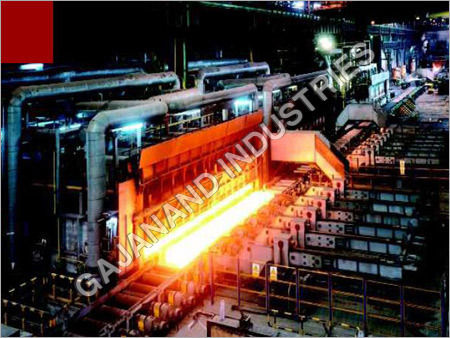
Tell us about your requirement

Price:
Quantity
Select Unit
- 50
- 100
- 200
- 250
- 500
- 1000+
Additional detail
Mobile number
Email

More Products in Steel Plant Category
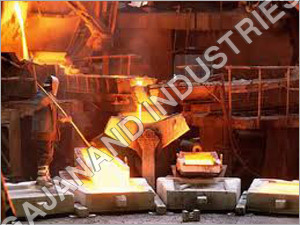
Ingot Making Steel Plant
Minimum Order Quantity : 1 Piece
Capacity : Up to 50 Tons per batch
Accessories : Ingots Mold, Ladle, Casting Platform, Cooling System
Model No : IMSP50T
Installation Guideline : Onsite Installation by Manufacturer
Features : Energy Efficient, Durable, High Output, Low Maintenance
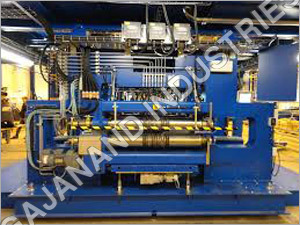
Industrial Thermax Plant
Minimum Order Quantity : 1 Piece
Capacity : 2000 LPH
Accessories : Control Panel, Piping, Valves
Model No : THXIND2000
Installation Guideline : Onsite Installation by Trained Engineers
Features : High Efficiency, Robust Construction, HassleFree Operation
Flying Shear Machine
Minimum Order Quantity : 1 Piece
Capacity : Up to 60 cuts/min
Accessories : Standard Tools, Lubrication System
Model No : FSM2024
Installation Guideline : Foundation and electrical connections as per manufacturer manual
Features : High Precision Cutting, Low Maintenance, Rugged Construction, User Friendly
Steel Melting Plant
Minimum Order Quantity : 1 Piece
Capacity : 18 Tons/batch
Accessories : Transformer, Water cooling system, Crucible
Model No : SMP1850
Installation Guideline : Onsite technical support provided
Features : High melting efficiency, Energy saving, Robust construction

 Send Inquiry


Our Products

26, Madhu Milan Estate, Naroda GIDC, Phase-I, Ahmedabad - 382330, Gujarat, India

Mr. Nikunj Bhavsar
(Proprietor )
Mobile :08045479309
 Send Inquiry
 Send SMS
Developed and Managed by Infocom Network Private Limited.
